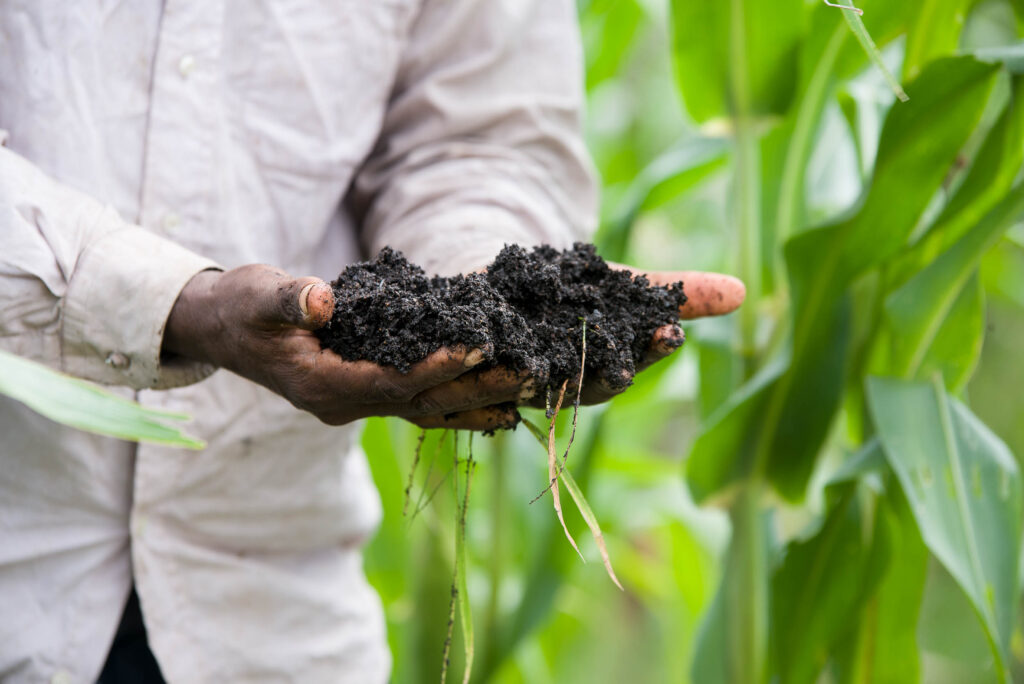
The Iran crisis is affecting agriculture far beyond the regions where the conflict is taking place. Around one third of global fertilizer trade passes through the Strait of Hormuz, making disruptions in the region a growing concern for food systems worldwide. Rising fertilizer prices, supply chain disruptions and pressure on agricultural production are already being felt across many countries. We spoke with our agronomist, Daniel Larkai, about what these global developments mean for farmers on the ground, why local fertilizer production matters, and how circular solutions can help build resilience in increasingly uncertain times.
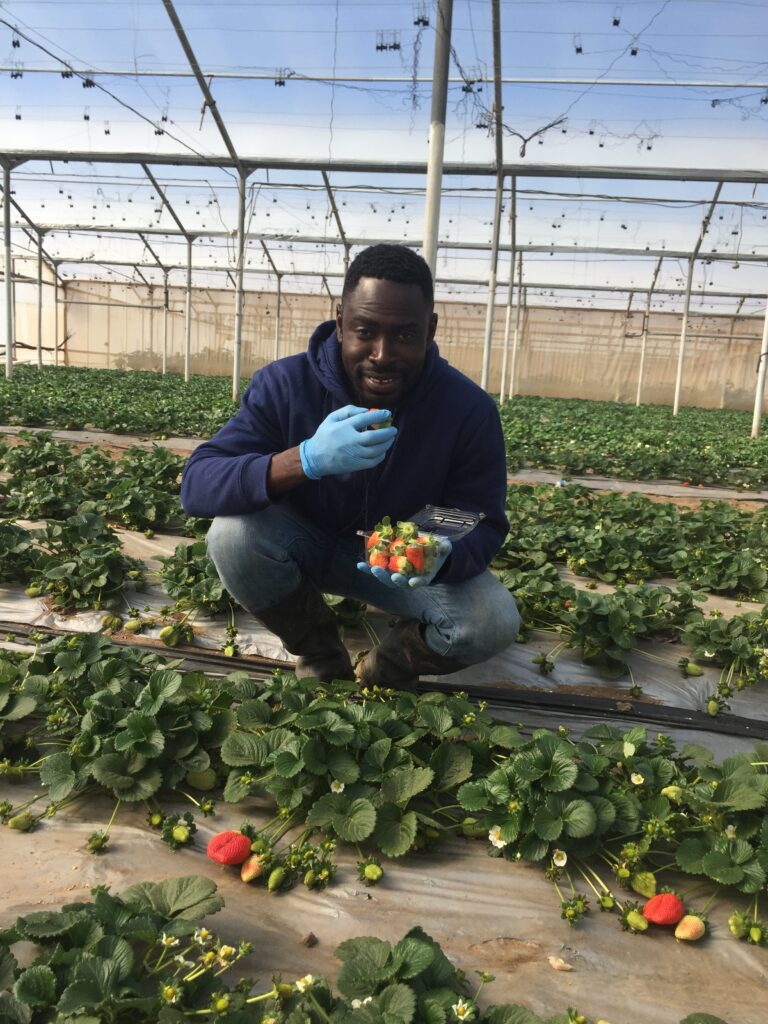
Daniel, why is the Iran crisis so important for Ghana and the world?
“The major concern is that the Strait of Hormuz route is critical for shipping petroleum products and fertilizer raw materials. Urea prices have already reportedly risen from around USD 500 per tonne to USD 750 per tonne, which is a very significant increase in the global market price. If shipments continue to face disruptions, fertilizer prices will keep rising.
Ghana is especially vulnerable because the country depends heavily on imported fertilizers. According to data discussed within the IFDC Fertilizer Technical Working Group, about 98.5% of fertilizers used in Ghana are imported.
China is also an important supplier for Ghana. So if China restricts exports to protect its domestic market, Ghana could face delays, higher prices, or reduced supply volumes. There are already reports of Chinese restrictions on some fertilizer exports.”
Have farmers in Ghana already started feeling the impact of rising fertilizer prices?
“There are definitely serious concerns within the fertilizer market at the moment. In Ghana, we are not yet seeing widespread shortages, but this will undoubtedly change if the conflict persists.
For now, the impact is somewhat softened because previously imported fertilizer stocks are still available on the market. At the same time, Ghana is still dealing with a food glut from last season, particularly for maize, rice and soya. Many farmers still have unsold produce sitting in storage, which has severely affected cash flow and reduced their ability to purchase new fertilizer.
Cocoa farmers are also under pressure because of declining international cocoa prices, and they are traditionally among the country’s largest fertilizer users. So currently, local demand for fertilizer is weak, which is, for now, somewhat buffering the shock of rising global prices.”
How could this situation change in the coming months?
“Within the next four to six weeks, the tomato production season will peak in Ghana and demand for fertilizer is expected to increase significantly. Ghana is already battling tomato scarcity. Farmers will be looking for nitrogen fertilizers such as urea and NPK formulations, which are heavily affected by the current situation.
Ghana’s highest fertilizer importation usually occurs in the second quarter, which is the period we are currently in. So if the conflict persists, the impact will undoubtedly become much more visible at the farm level very soon.”
What worries you most about this situation?
“I think the most worrying part is not even the effect on farmers. Because whatever challenges farmers face through increased production costs, at the end of the day, everything will be passed on to the consumer.
Farmers are likely to reduce fertilizer use because it becomes too expensive. Lower fertilizer use means lower yields. And when food production drops while demand stays high, food prices increase for consumers.
So to me, the consumer is the one in the most critical situation. This is a serious problem for Ghana.”
Have you seen similar patterns before?
“Yes. During the COVID-19 pandemic, factory shutdowns, shipping delays and fuel disruptions caused fertilizer prices to rise sharply. Nitrogen fertilizers were especially affected because their production depends heavily on natural gas. What we are seeing now follows a very similar pattern.
The Russia–Ukraine war also had a similar effect. Both countries are major players in grain and fertilizer markets. The conflict disrupted wheat supply, increased energy prices and pushed up food prices globally. We also have to remember what rising food prices can mean politically. During the Arab Spring in 2011, food prices were one of the factors that contributed to social unrest in several countries.
One of the biggest lessons from recent global shocks is that, as an import-dependent country, we are highly exposed to international disruptions. Our food security is tied to foreign fertilizer producers. So the question is: what happens if these fertilizer-producing plants shut down, or if the Iran conflict continues for several years? What happens to our food security?”
What role can locally produced fertilizers play?
“Locally produced fertilizers can play a very important role in reducing this vulnerability. We really need to focus on how, as a country, we can become more self-reliant.
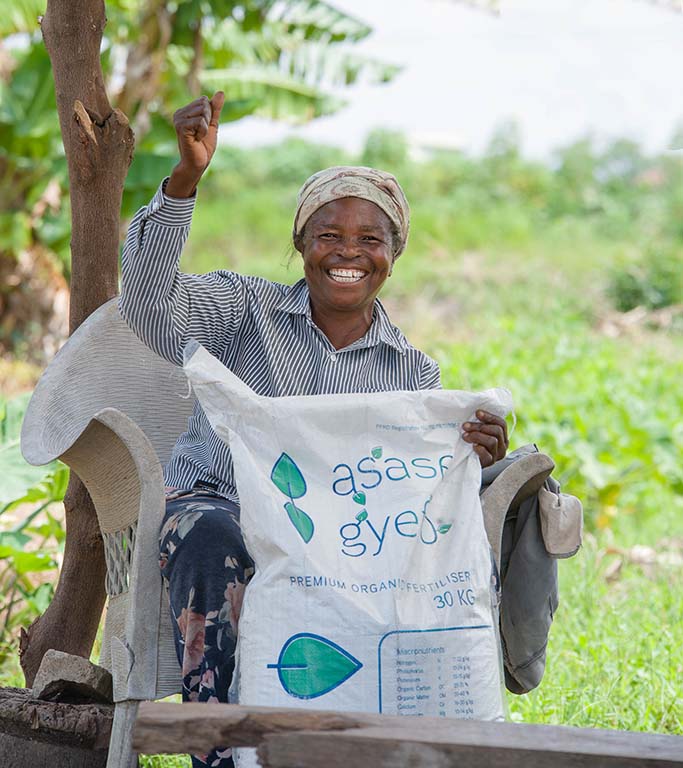
At Safisana, we produce organic fertilizer locally from local waste products. It’s a circular upcycling process that is relatively independent of international supply chain disruptions. Farmers can continue to access soil nutrients even during periods of global shortage or import delays.
And it is not only geopolitical tensions that matter. Imported fertilizers are also highly sensitive to foreign exchange shocks. Locally produced fertilizers are less affected by these international pressures, helping to stabilise fertilizer availability and pricing for farmers.
There are so many other benefits, too, for the environment in particular. Organic fertilizers improve soil health, water retention and soil microbial activity, which helps farmers become more resilient to drought and climate stress. Moreover, as opposed to synthetic fertilizers, organic fertilizers like Asase Gyefo maintain crucial nutrients recovered from organic waste that are needed to ensure quality food production and consumption. Organic fertilizers are therefore not only a solution to economic and political challenges but also address global issues such as food security more effectively. ”
Can locally produced fertilizers fully replace imported fertilizers?
“Not entirely, at least not in the short term. But they can substantially reduce dependence on expensive imported chemical fertilizers. Farmers can combine compost with smaller amounts of NPK, urea or other formulations to maintain productivity while lowering overall fertilizer expenditure.
Locally produced organic fertilizer should not be viewed as a complete replacement for imported chemical fertilizers. Rather, it should be seen as part of a national fertilizer resilience strategy, where organic fertilizers build long-term soil health and integrated nutrient management reduces dependence on imports.
The current global uncertainty clearly demonstrates the need for Ghana to invest more aggressively in local compost and biofertilizer industries, biochar technology and farmer education on integrated soil fertility management. The government should also encourage policies that support domestic fertilizer manufacturing.
If properly supported, locally produced fertilizers can help Ghana build a more resilient, affordable and sustainable agricultural system that is less vulnerable to global geopolitical shocks.”
Find out more about OUR CIRCULAR MODEL
Find out more about OUR ASASE GYEFO PREMIUM ORGANIC FERTILIZER